Jan – Feb 2023
Behavior Design / Mobile App
Most of us sit all day. We study, we work, we scroll — and our bodies pay for it. Neck pain, back stiffness, low energy. We already feel it.

We know exercise is one of the best ways to counter it. Yet despite knowing the risks and the remedy, most of us still struggle to build consistent movement habits. This gap between knowing and doing became the central question of this project.

The usual suspects: no time, no motivation, no money. But these didn't fully explain it. Plenty of people had all three — and still didn't move.
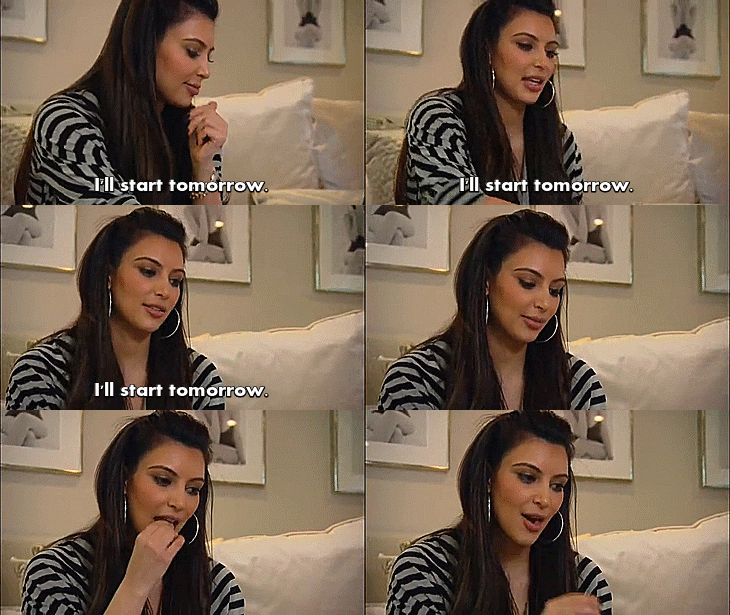
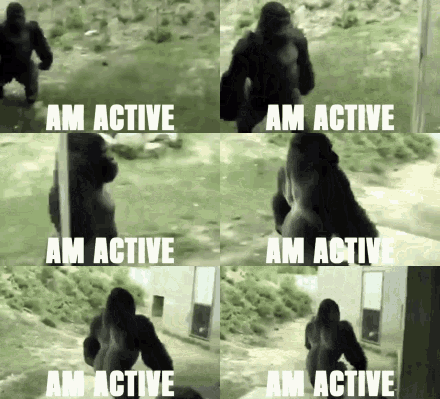
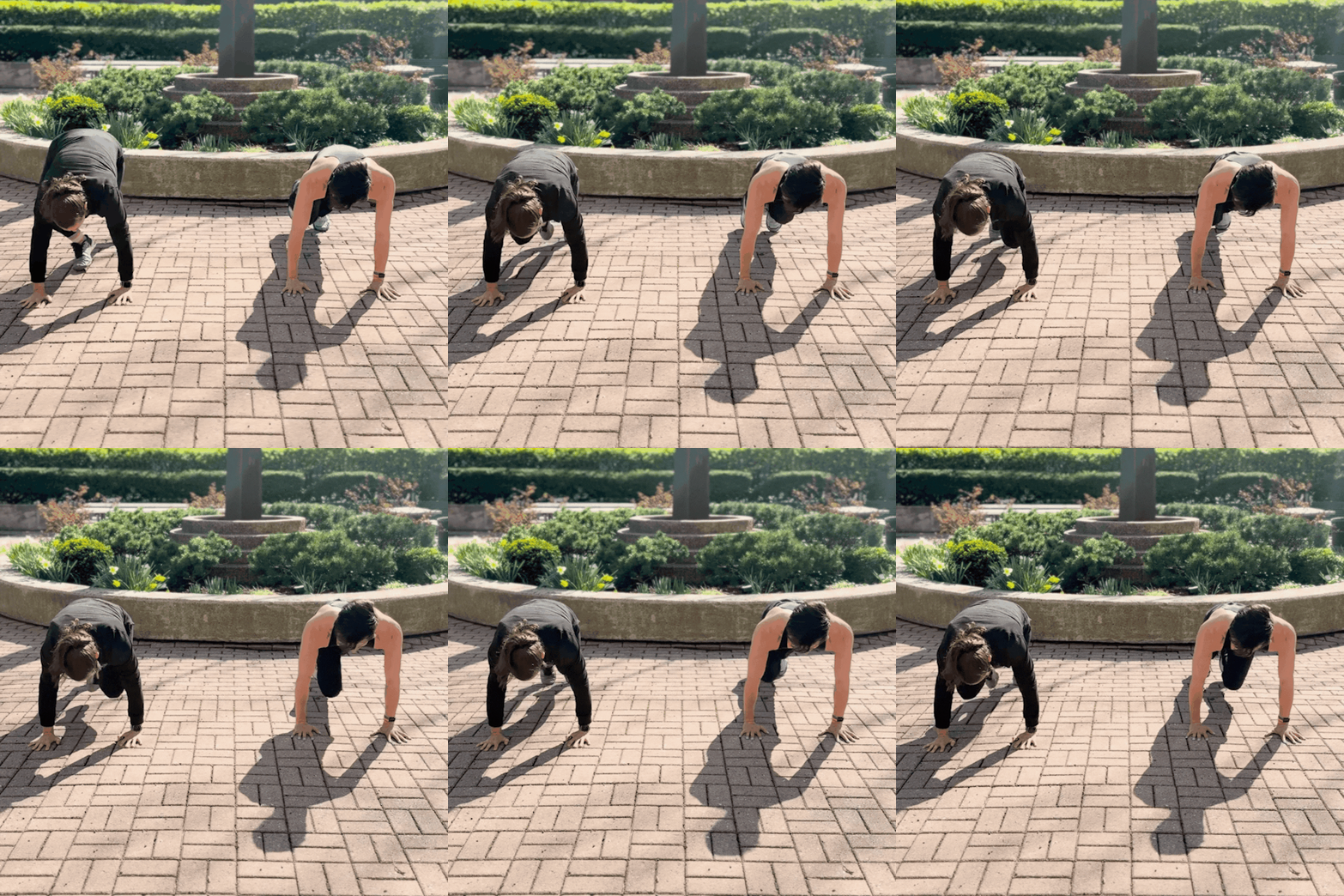
The real barrier wasn't time or motivation. It was that movement wasn't part of people's daily habits, their environments reinforced inactivity, and they didn't know what to do or how to start. The problem wasn't willpower — it was context.

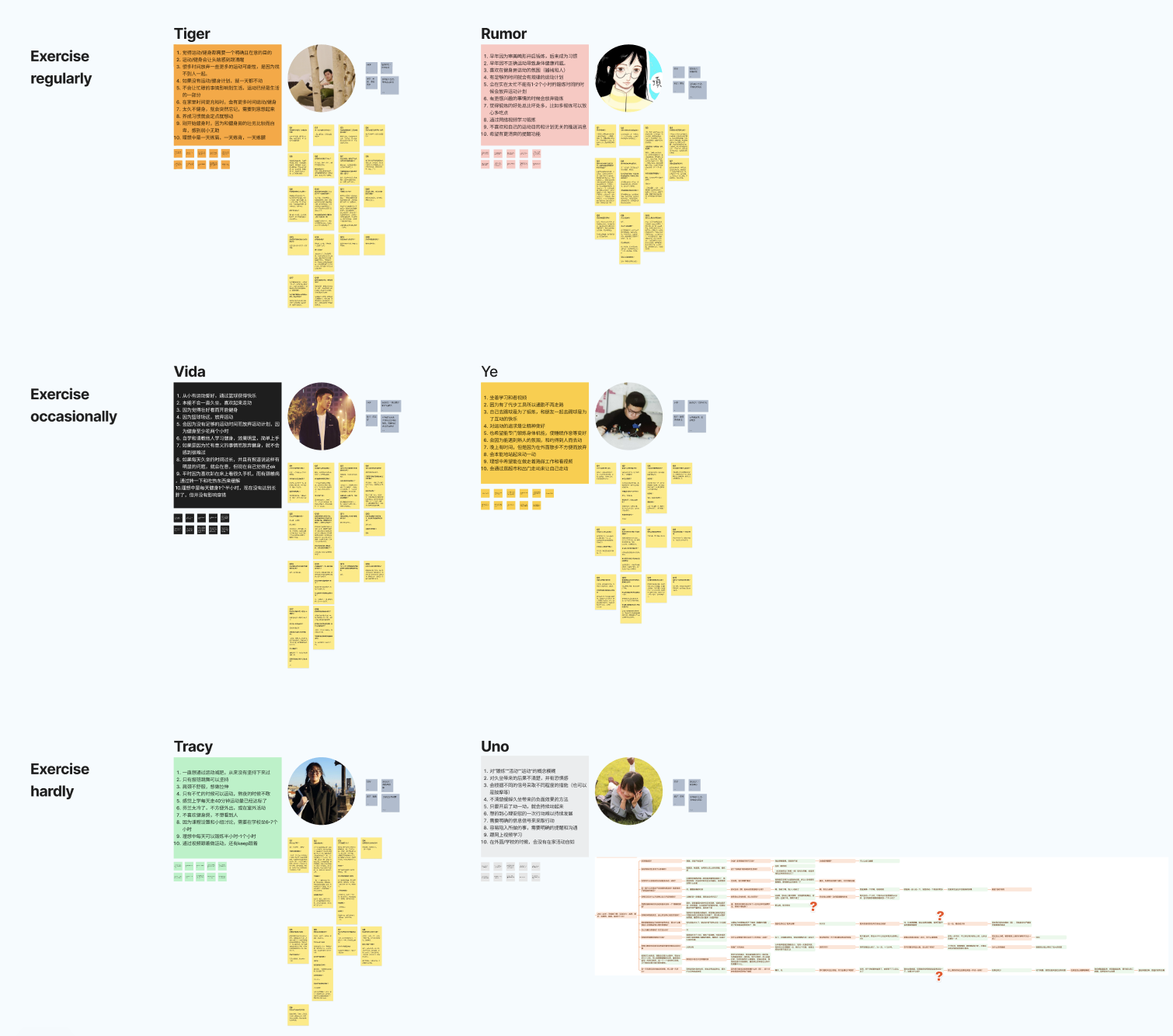
Interview Notes
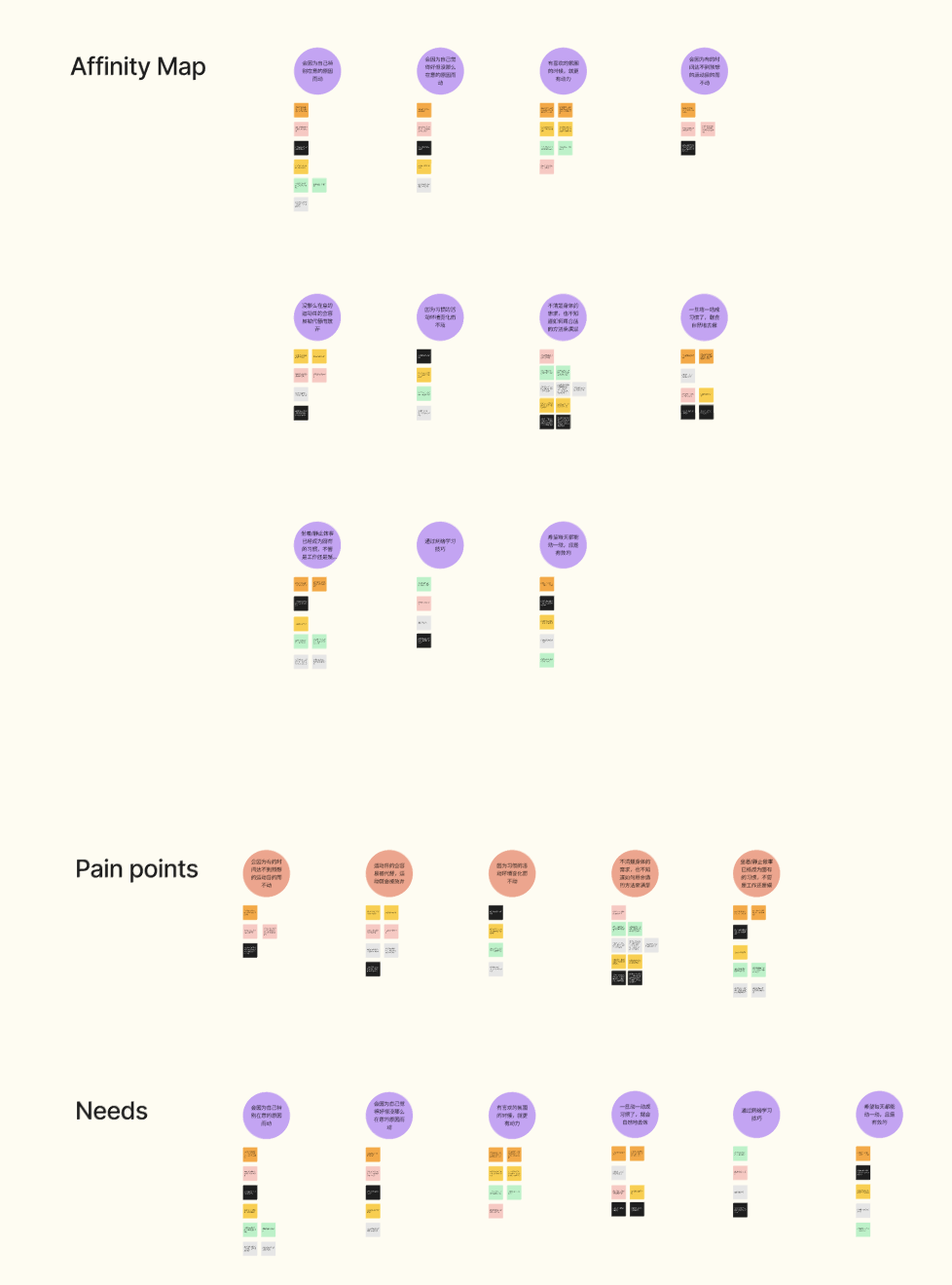
Affinity Map
If motivation isn't the problem, then telling people to "just exercise more" won't work either. So I started from a different angle — what if moving didn't have to feel like a decision at all?
That led me to four opportunities: make action immediate so there's no planning involved, keep movement flexible instead of prescriptive, let habits form through repetition rather than willpower, and remove the emotional weight that makes starting feel hard.
I explored a bunch of directions — notifications that nudge you when you've been still too long, quick-switch activity cards, AR guidance, voice feedback. Some were interesting but heavy. I kept coming back to the same thing: the simpler the ask, the more likely someone will actually do it.
That instinct lined up with what I found in habit research. James Clear's habit loop — cue, craving, response, reward — showed that repetition matters more than effort. If something is easy to start, short enough to finish, and fits into daily life, it sticks.
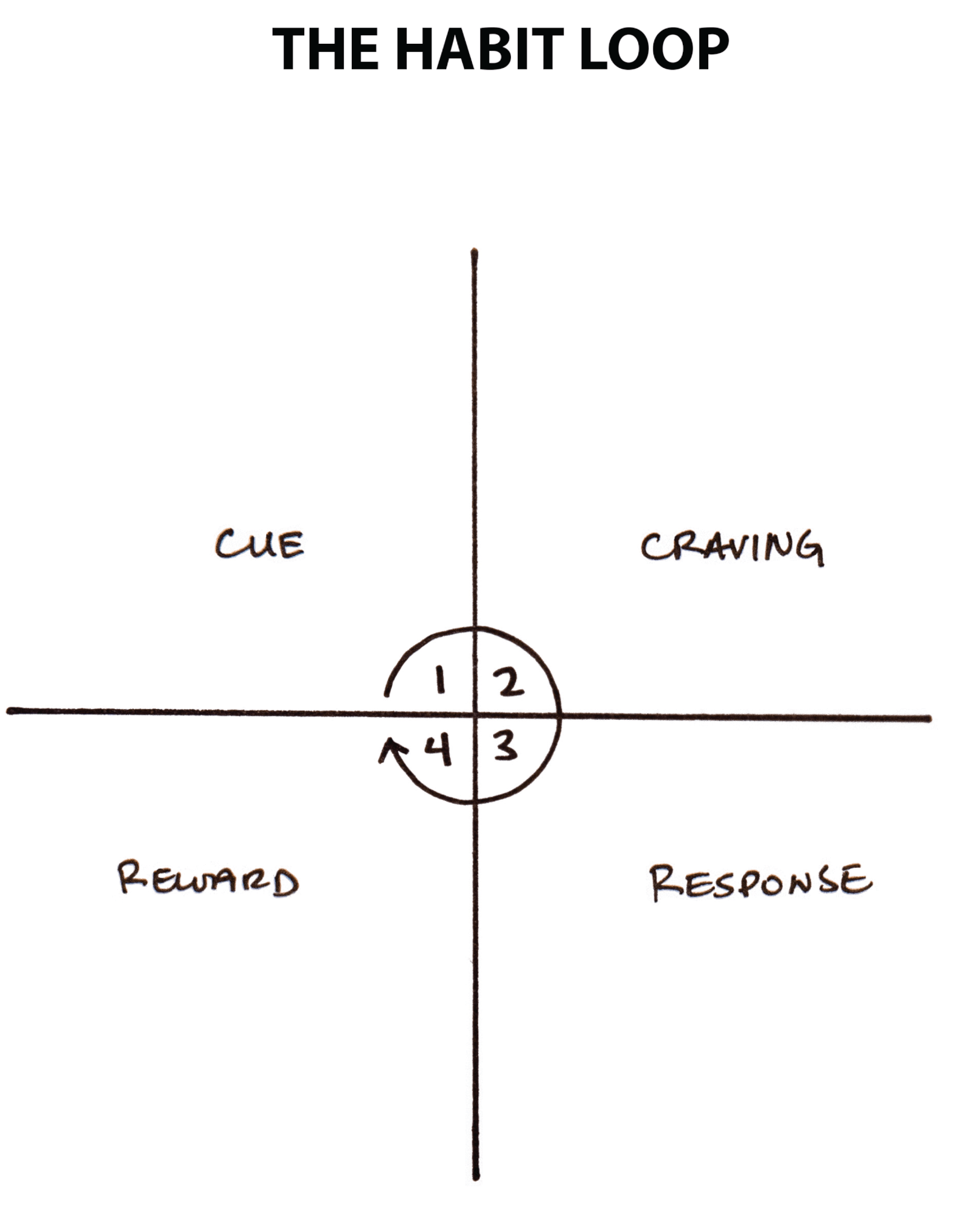
The Habit Loop — Cue → Craving → Response → Reward (James Clear, Atomic Habits)
A phone is the one thing people always have on them — no gear, no gym, no setup. So I looked at existing apps, studied what worked, and designed around that.

Emotion Map
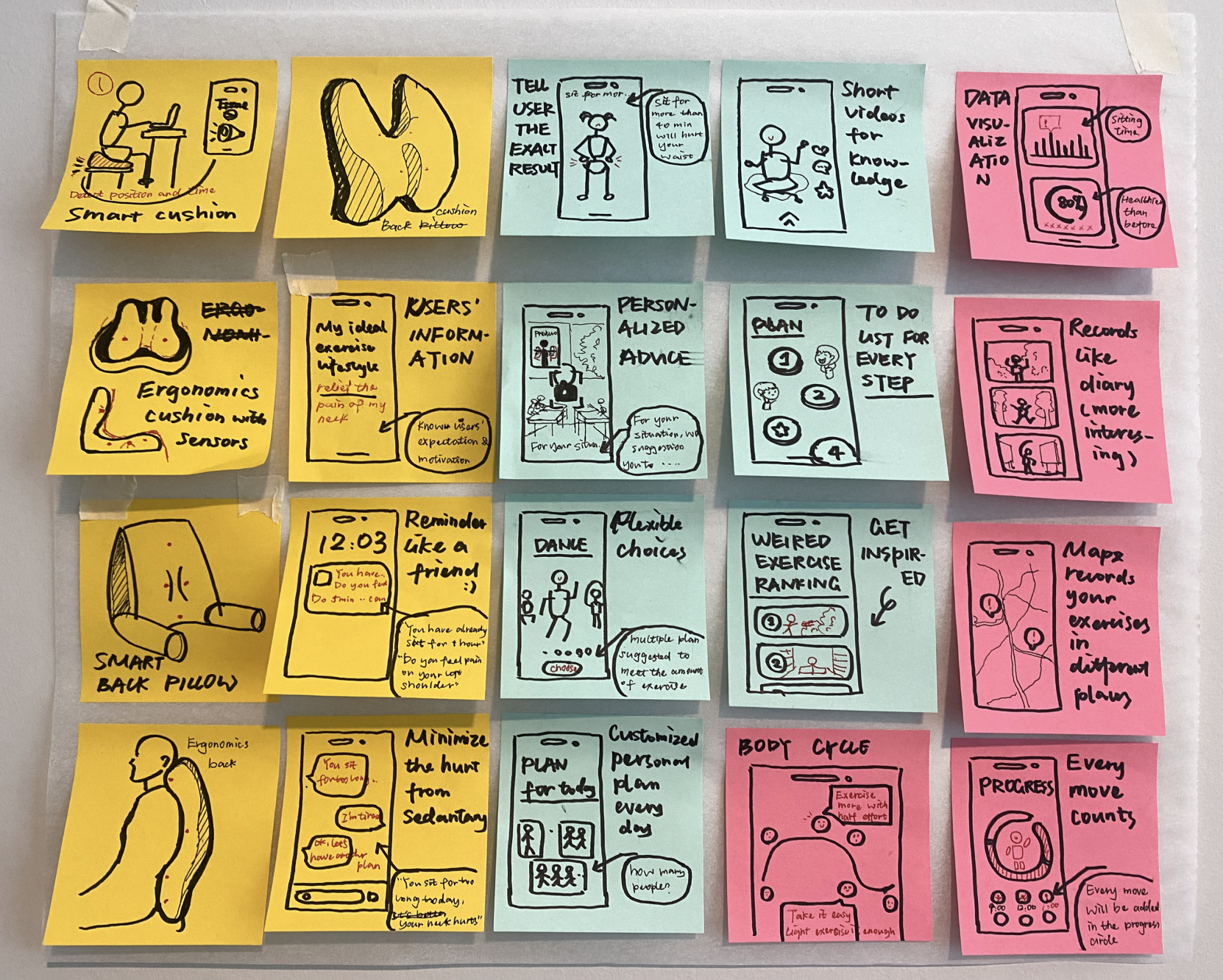
Rapid Ideation Sketches

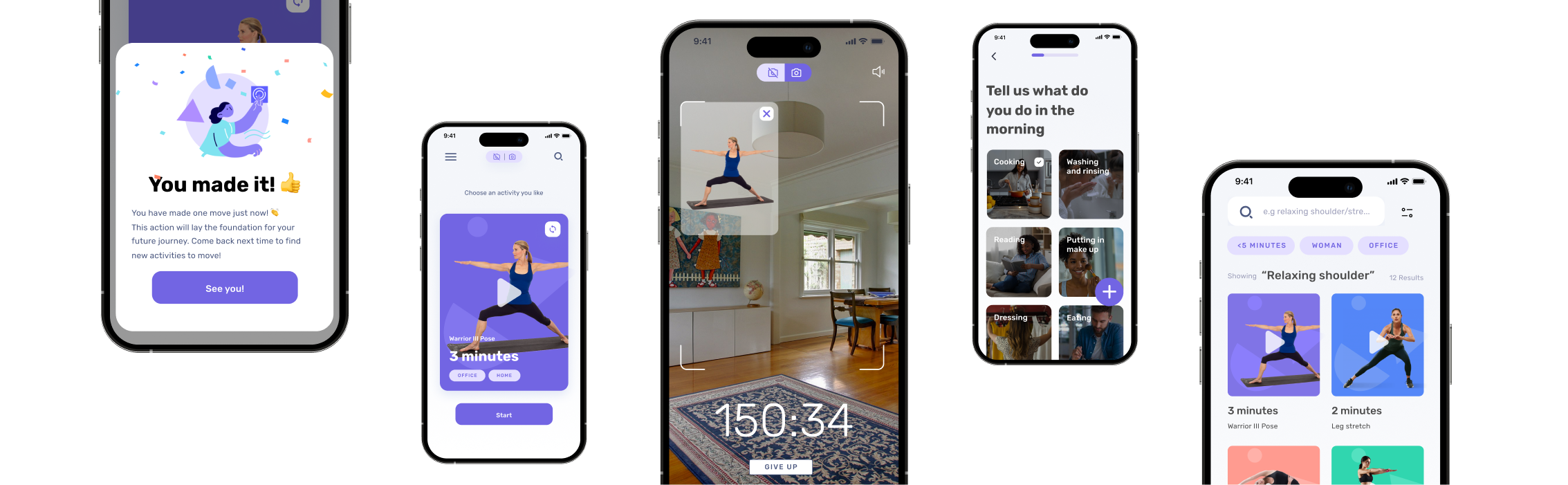
StepUp is a mobile app designed to help people unlock micro exercises anytime and anywhere through low-friction, habit-centered interactions.
StepUp breaks movement into tiny, repeatable loops: a trigger reminds you, a guided action gets you moving, and instant feedback keeps you going.
Every extra step between intention and action is a chance to quit. One tap, and you're moving.
At a desk, on a commute, or in a small apartment — there's always something you can do right now.
This project started from a real problem I saw in someone close to me — and honestly, in myself too. I was never the kind of person who exercised. The idea of going to a gym or following a workout routine felt distant and overwhelming.
But through this design process, I began applying the same principles I was designing for: start small, remove friction, and let repetition build identity. I stopped thinking about "working out" and started just moving — a stretch here, a walk there, a few minutes of activity between tasks.
Over time, those small actions became habits. And those habits changed how I saw myself. Today, I exercise every day — not because I suddenly found motivation, but because movement became a natural part of my life. That shift is exactly what StepUp was designed to create.
The biggest takeaway: designing for behavior change taught me that the best solutions don't demand willpower — they make the right action the easiest one.